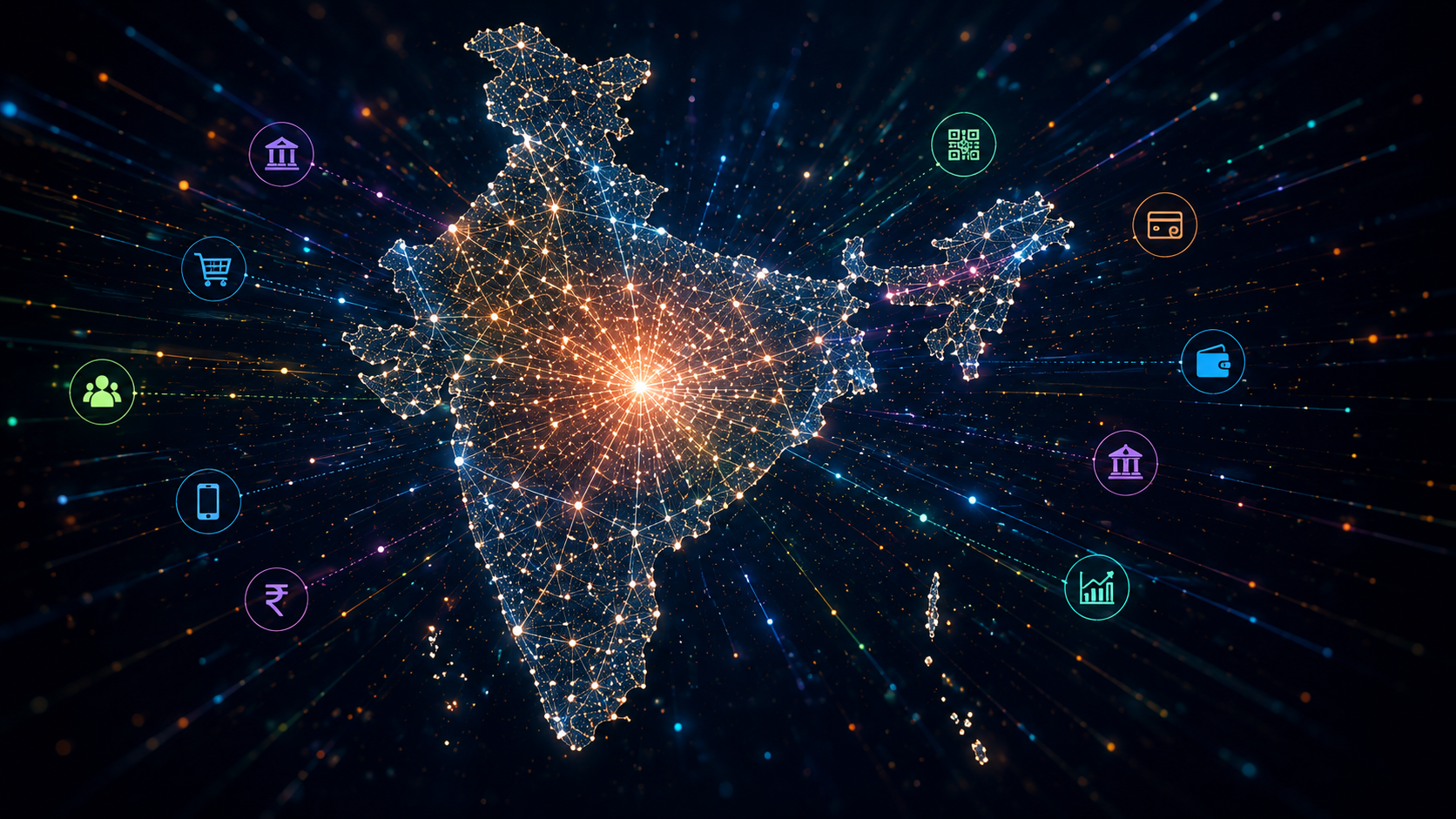
Ten Years of UPI: How a Simple Idea Rewired India’s Economy
August 2026
Walk into almost any shop in India today, big or small, and you’ll spot the same small paper QR code taped near the counter. Ten years ago, that code didn’t exist. Today, it has quietly changed how an entire country handles money.
The Unified Payments Interface, or UPI, launched in April 2016 with a modest start: just 21 banks on board, and a mere 373 transactions in its very first month. A decade later, the numbers are hard to picture. In FY 2025-26 alone, UPI processed 24,162 crore transactions (about 241.6 billion), worth roughly ₹314 lakh crore, close to $3.7 trillion, nearly 12,000 times the volume it started with.

What’s remarkable isn’t just the size, it’s who’s using it. Nearly 86% of all merchant payments on UPI are for less than ₹500, the everyday tea, groceries, and auto rides that never used to leave any bank record at all. Because NPCI charges merchants nothing to accept UPI payments, small shopkeepers and street vendors who once ran purely on cash are now part of India’s formal digital economy, often for the first time.
UPI’s influence now reaches well beyond India’s borders too. It already handles about 49% of all real-time payments processed anywhere in the world, and it’s live in eight countries, including the UAE, Singapore, France, and, as of June 2026, a new corridor with Nepal. Behind this sits a quieter shift: the number of banks live on UPI has grown from around 21 in its first year to over 700 today, letting a customer at any bank pay a merchant at any other bank, instantly, for free.
Growth this fast brings real challenges too. Fraud cases on UPI crossed 10.64 lakh in FY 2025-26 (through November), worth about ₹805 crore, pushing NPCI to cap most transactions at ₹1 lakh a day. Regulators have also pushed to stop any single app from dominating the market, and it appears to be working: PhonePe and Google Pay’s combined share dipped below 80% for the first time in May 2026.
UPI didn’t just digitize payments. It gave India’s small businesses a financial footprint, gave regulators a new lever for competition, and gave the world a working example of public payment infrastructure at scale. Ten years in, it’s still just getting started.
Sources
• Press Information Bureau, Government of India. “UPI Completes 10 Glorious Years, Emerges as World’s Largest Real-Time Payments Platform.” April 30, 2026.
• National Payments Corporation of India (NPCI). UPI Product Statistics, 2026.
• ANI / DD India. “UPI Records 23.2 Billion Transactions Worth Rs 29.9 Trillion in May 2026: NPCI.” June 2, 2026.
• Prasar Bharati (News on Air). “UPI Transaction Volume Rises 29% Year-on-Year to 21.63 Billion in December.” January 1, 2026.
• Oxigen Wallet. “UPI Apps Market Share 2026 – Yearly Transactions Data & Trends.” July 2026.